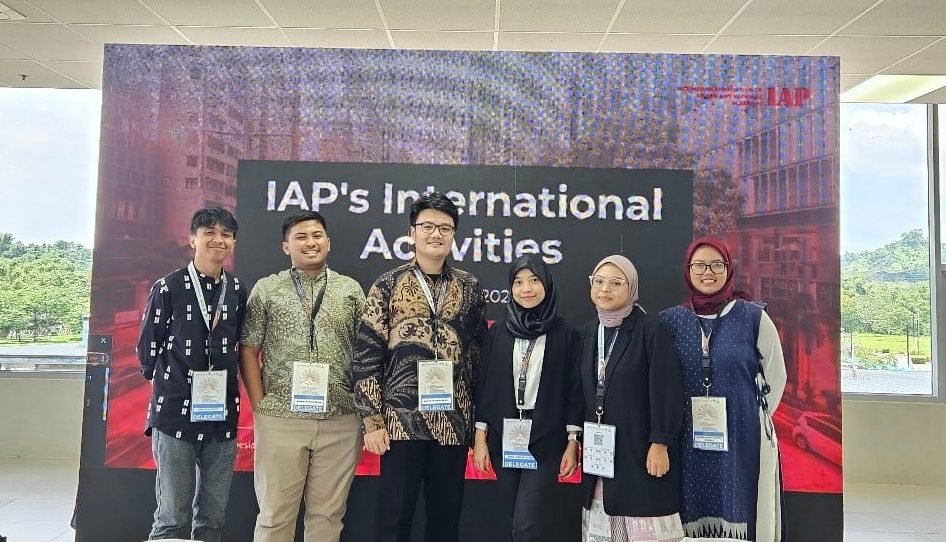

The ISOCARP World Planning Congress 2024 was held from September 10 to 13 in New Clark City, Tarlac Province, Philippines. The theme was “1st International Conference for New Cities: Planning New Regenerative Cities”. The conference focused on discussions among urban and regional planners about developing new cities with an emphasis on climate-adaptive resilience. The conference holds significance for HAS as part of the Indonesian Association of Urban and Regional Planners (IAP) in collaboration with the Ministry of Environment and Forestry (KLHK), in promoting the use of Environmental Carrying Capacity (ECC) and Environmental Assimilative Capacity (EAC) as a key instrument for environmental utilization, management, and protection.
We recognize that IAP and KLHK’s support has been instrumental in our efforts to advance environmental issues that are often overlooked, even though crucial for the development of sustainable cities.
HAS participated in the ISOCARP World Planning Congress 2024 by actively participating in discussions on environmental issues and climate-resilient urban planning. Represented by the Junior Associate team, HAS presented three research topics related to Track 3: Climate Adaptive & Resilient (New) Cities, “Advancing Adaptive Resources Reutilization,” and one research topic related to Track 1: New City Planning & Development, “Navigating the Future.”
Parallel Sessions: Track 3.1 – Policy to Practice: Scaling Innovation for Climate Resilient Cities
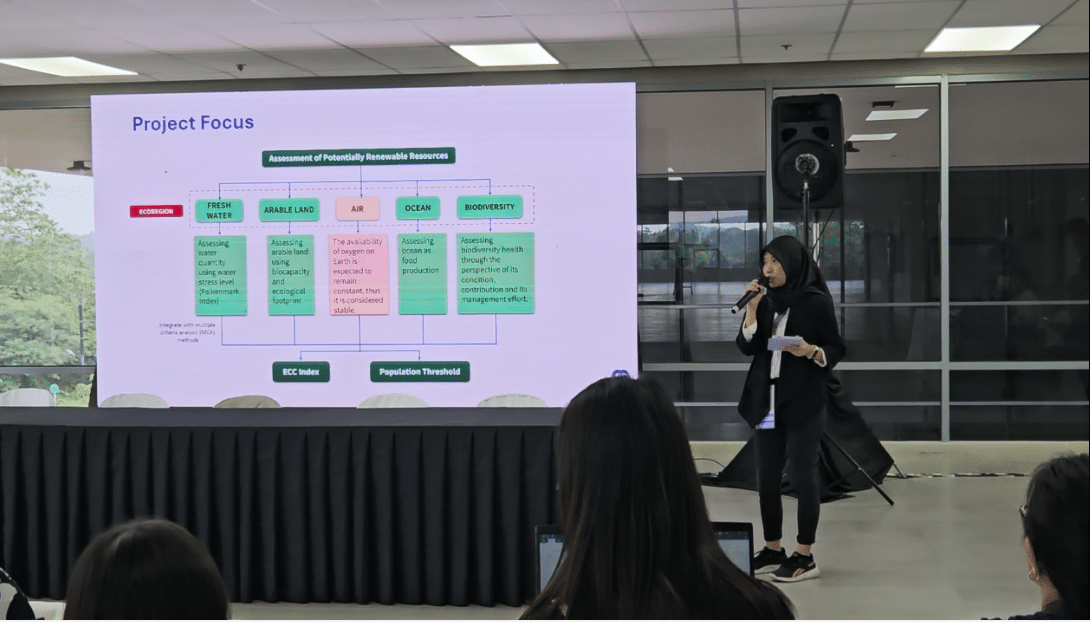
Dema Amalia Putri presented research entitled “Assessment of Environmental Carrying Capacity: Concepts and Implementation in Indonesia” focusing on identifying and determining the environment’s ability to provide natural resources to support population needs. We highlighted the current state of five potentially renewable natural resources (water, land, air, ocean, and biodiversity) to measure their thresholds in terms of resource quantity (as index) and the maximum population. Its relevance to climate-resilient urban and regional planning lies in using the ECC as a guideline to prevent resource depletion by limiting environmental exploitation beyond its capacity. The research also highlights the importance of integrating ECC into spatial planning and Regional Long-Term Development Plans to achieve greener, more resilient, and sustainable urban development.
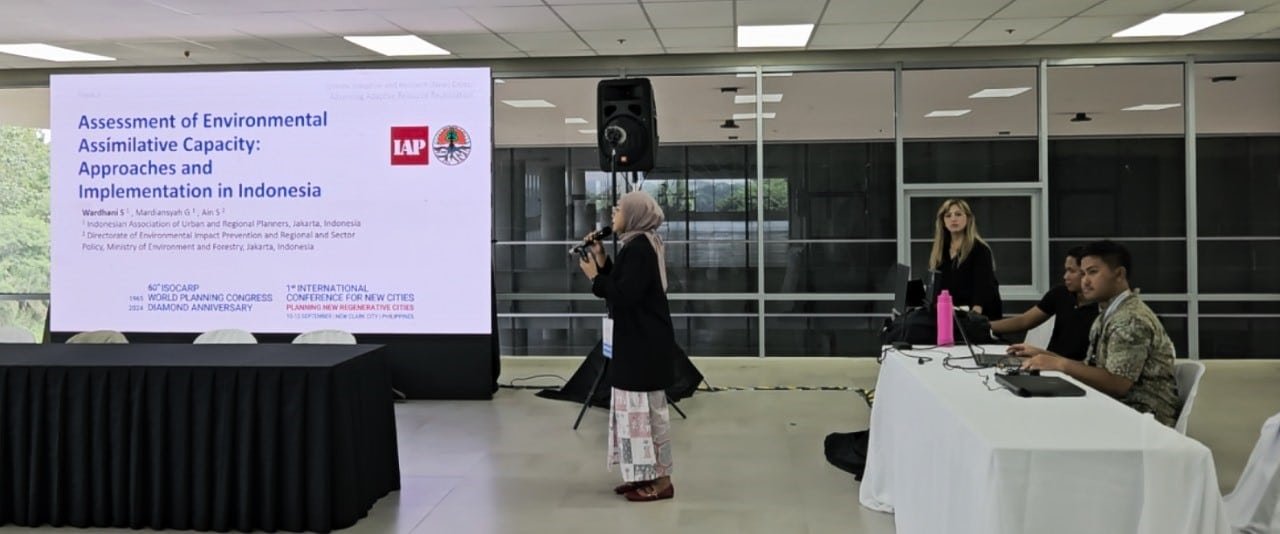
Sofy Anggita Wardhani presented research entitled “Assessment of Environmental Assimilative Capacity: Approaches and Implementation in Indonesia” focusing on identifying and determining the assimilative ability of the environment to absorb maximum pressure or pollutants without causing ecological damage. We highlighted the current state of pollution in five potentially renewable natural resources (water, land, air, ocean, and biodiversity) and the ability of available ecosystem services to absorb such pollution. The link to climate-resilient urban and regional planning is that the value of environmental capacity provides the impetus to create behaviors and increase community empowerment that is more resilient and proactive toward reducing local pollution levels.
Parallel Sessions: Track 3.3 – Cultured-centered, Community-driven Resilience Planning and Action
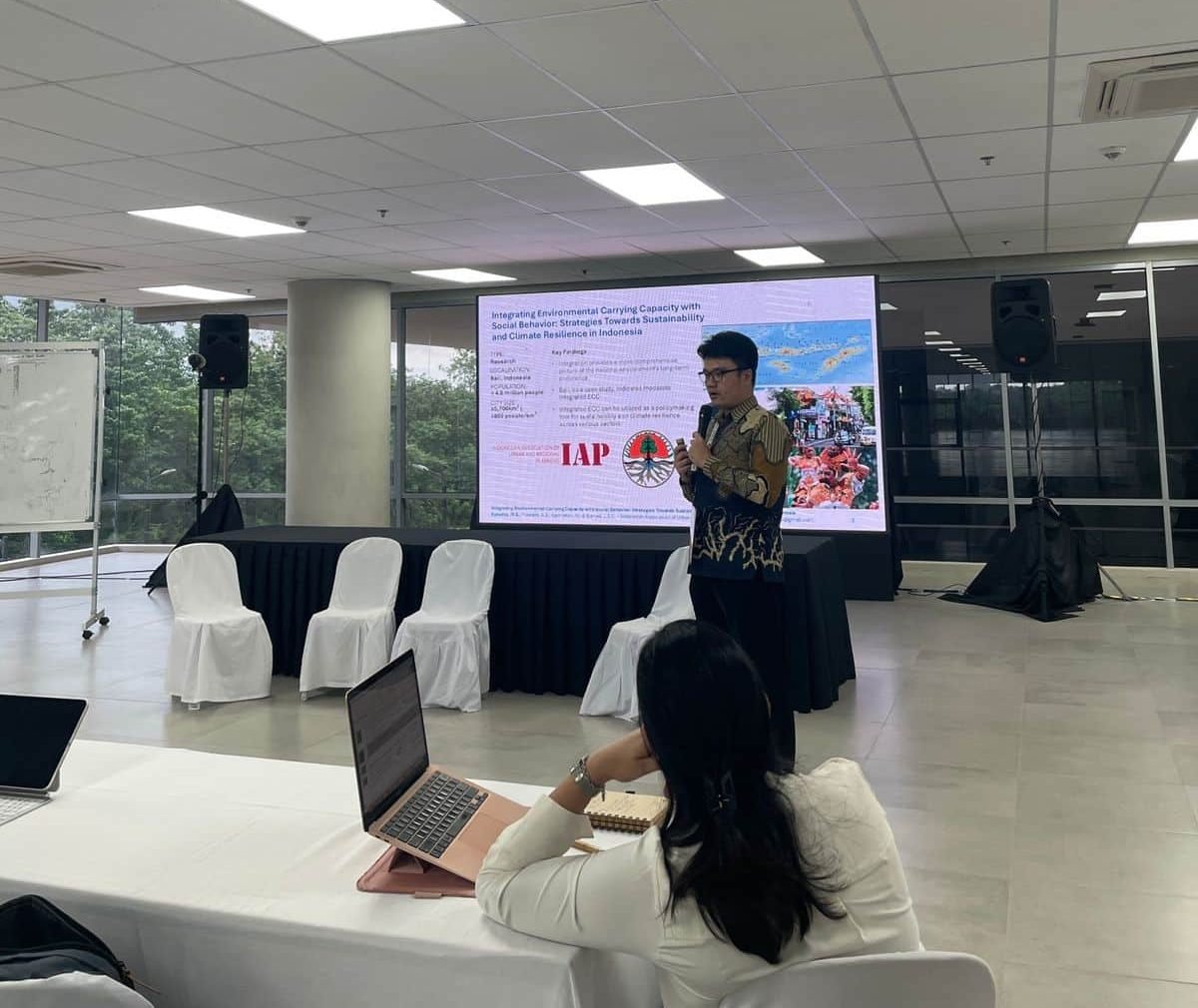
Mohammad Erick Kusuma presented research entitled “Integrating Environmental Carrying Capacity with Social Behavior: Strategies Towards Sustainability and Climate Resilience in Indonesia.” We highlighted the integration between previous research on ECC and EAC with environment-related social behavior to measure an environmental sustainability index. In addition to providing a more comprehensive overview of environmental conditions, this research can also be utilized in the development of spatial plans, environmental protection and management plans, development plans, and other sectoral plans. Thus, this research aims to serve as a benchmark for achieving sustainability and climate resilience.
Parallel Sessions: Track 1.3 – Sustainable Transport and Mega-Project
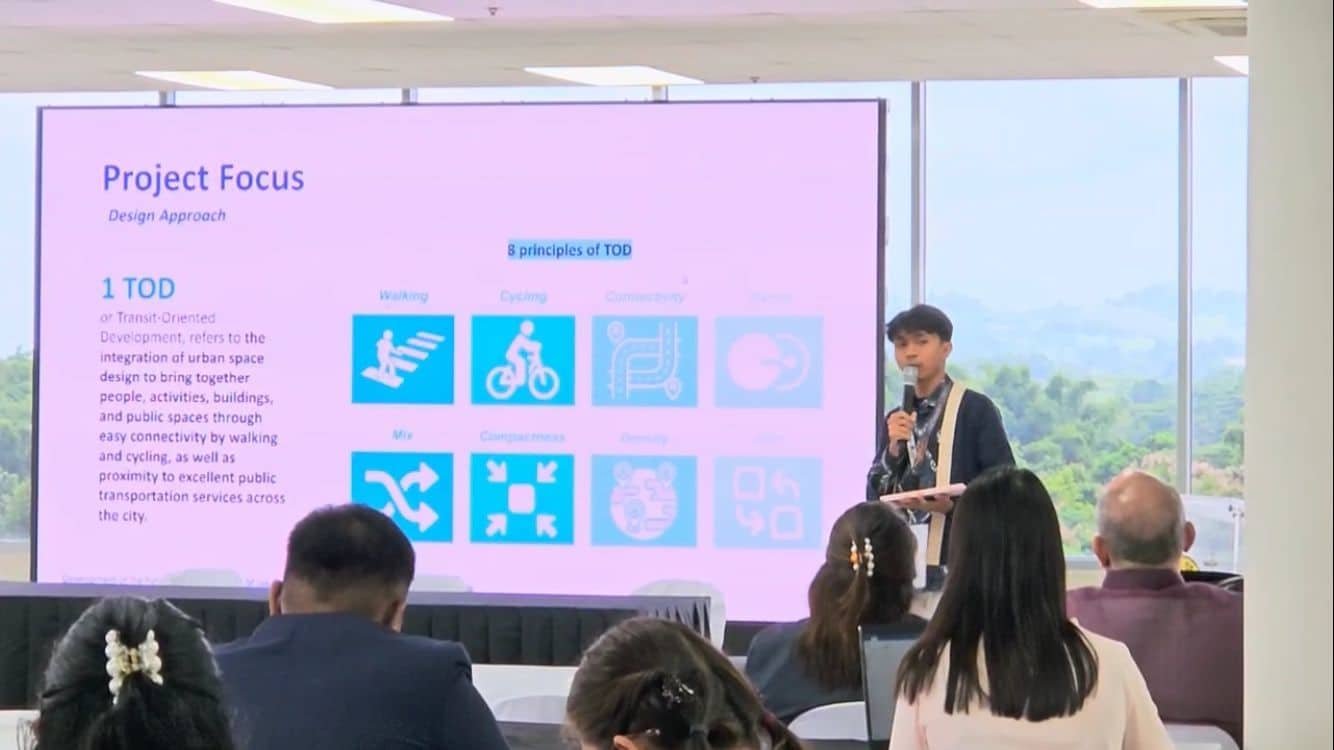
Another colleague from the Junior Associate team also presented ideas regarding the implementation of urban design strategy that integrates sustainable development pillars (environmental, social, and economic aspects) for the new regenerative cities. Nabil Rizki Mulya Widodo presented the urban design research entitled “Development of the Future TOD Area in Blok M Jakarta as a Global Economy District.” This research was developed in response to the challenges faced by the Blok M area, which has gradually lost its identity and appeal as a popular entertainment and commercial district, particularly renowned during the 1970s to the late 1990s. The presence of the MRT Station and Terminal, along with policies promoting the area as a Transit-Oriented Development (TOD), serve as the foundation for the design. The relocation of the capital also pushes Jakarta to become a Global City, making it necessary for Blok M to revitalize, maximize its land value, and contribute to the region’s economy and investment climate.
The development concept for the area is to create a complete TOD zone with a human-centric design approach and inclusive economic growth. The area is designed to be a center of community activity, integrating Work-Play-Live elements. Through this design, the area aims to contribute to:
- Economic Growth: Driving economic growth, boosting activity, and maximizing land value potential.
- Environmental Sustainability: Reducing emissions and carbon footprint by promoting non-motorized transport and optimizing land-use efficiency, aligning with the vision of a sustainable, green, and garden city.
- Social Inclusion: Creating a more inclusive and comfortable environment for all community members, developing a livable and enjoyable area for its residents.
Closing
The presentations were well-received, with a panelist noting that urban and regional planning often overlooks environmental capacity limits. The discussion inspired local governments to consider integrating ECC, EAC, and environment-related social behaviour into their environmental-social safeguards. We also shared examples of planning that harmonizes environmental, social, and economic aspects. Thus, HAS’s participation in international forums demonstrates our commitment to advancing sustainable urban and regional planning, with a focus on creating regenerative, inclusive, and eco-friendly cities that prioritize community well-being and economic growth.